
John Deere L100 Owners Manual: A Comprehensive Guide
This guide provides detailed instructions for operating, maintaining, and repairing John Deere L100 lawn tractors, covering safety, components, and troubleshooting.
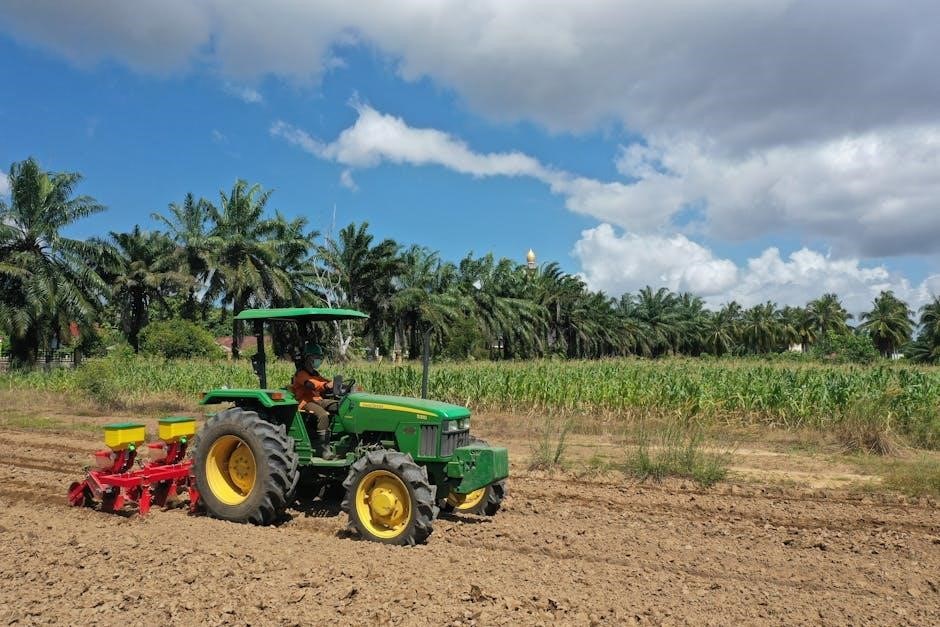
The John Deere L100 is a popular lawn tractor known for its reliability and ease of use, serving homeowners with efficient lawn care solutions. Introduced in the early 2000s, it quickly became a staple for medium-sized properties. This manual serves as a comprehensive resource for owners, offering detailed guidance on operation, maintenance, and repair. Understanding your L100 is crucial for maximizing its lifespan and performance.
Whether you’re a first-time owner or an experienced operator, this guide will help you navigate the features and functions of your tractor. It emphasizes safety precautions and provides step-by-step instructions for various tasks.
Safety Precautions and Guidelines
Operating a lawn tractor involves inherent risks; therefore, strict adherence to safety guidelines is paramount. Always read and understand the complete safety manual before operation. Keep children and pets away from the mowing area. Never operate the tractor under the influence of drugs or alcohol. Ensure all guards and shields are securely in place.
Before each use, inspect the mowing area for obstacles. Wear appropriate safety gear, including eye protection and sturdy footwear. Never attempt repairs while the engine is running. Disconnect the spark plug wire before performing maintenance.
Understanding the L100’s Key Components
The John Deere L100 features a robust engine, a hydrostatic transmission, and a durable mowing deck. Key components include the engine’s cooling system, the fuel system, and the electrical system. The transmission system efficiently transfers power to the wheels, enabling smooth operation. The hydraulic system controls deck lift and other functions.
Familiarize yourself with the location of essential controls, such as the throttle, brake, and deck engagement lever. Understanding these components is crucial for safe and effective operation, maintenance, and troubleshooting of your L100 tractor.
Engine Specifications and Maintenance
The John Deere L100 typically features a Briggs & Stratton engine, often a 20.5 HP model. Regular maintenance is vital for optimal performance. This includes checking and changing the oil according to the schedule, typically every 25-50 hours of operation. Inspect the air filter regularly, cleaning or replacing it as needed to ensure proper airflow.
Spark plug maintenance, fuel filter checks, and ensuring proper cooling system function are also crucial. Always use the recommended oil type and follow the manufacturer’s guidelines for all maintenance procedures to prolong engine life.
Transmission System Overview
The John Deere L100 utilizes a hydrostatic transmission, providing smooth and efficient operation. This system employs hydraulic fluid to transfer power from the engine to the wheels, enabling variable speed control. Regularly check the transmission fluid level and condition, ensuring it’s clean and at the proper level for optimal performance.
Avoid abrupt stops and starts, as this can strain the transmission. Inspect drive belts for wear and tear, replacing them when necessary. Proper maintenance of the hydrostatic transmission is key to a long-lasting and reliable mowing experience.
Hydraulic System Details
The L100’s hydraulic system powers the lifting and lowering of the mower deck and any attached implements. It relies on hydraulic fluid to transmit force, ensuring precise control. Regularly inspect hoses and connections for leaks or damage, addressing any issues promptly to prevent fluid loss and maintain system pressure.
Use only John Deere-approved hydraulic fluid to avoid compatibility issues and ensure optimal performance. Check the fluid level periodically and top off as needed. Proper hydraulic system maintenance contributes to smooth operation and extends the life of your equipment.
Operating Instructions
Before each use, thoroughly inspect the tractor and surrounding area for any obstructions. Ensure all safety devices are functioning correctly. Familiarize yourself with the location and operation of all controls, including the steering, brakes, and mower engagement. Always adjust the seat and mirrors for optimal comfort and visibility.
Start the engine following the prescribed procedure, allowing it to warm up before engaging any attachments. Operate the tractor at a safe speed, adapting to terrain and conditions. Always disengage the mower blades before transporting or parking the machine.
Starting and Stopping Procedures
To start the L100, ensure the parking brake is engaged, the blades are disengaged, and the transmission is in neutral. Turn the ignition key to the ‘on’ position, then depress the clutch or brake pedal. Turn the key further to engage the starter, releasing it once the engine starts. Allow the engine to warm up before operation.
For stopping, slowly disengage the mower blades, reduce throttle, and apply the brakes to come to a complete stop. Place the transmission in neutral, engage the parking brake, and turn the ignition key to the ‘off’ position. Remove the key to prevent unauthorized use.
Mowing Techniques and Best Practices
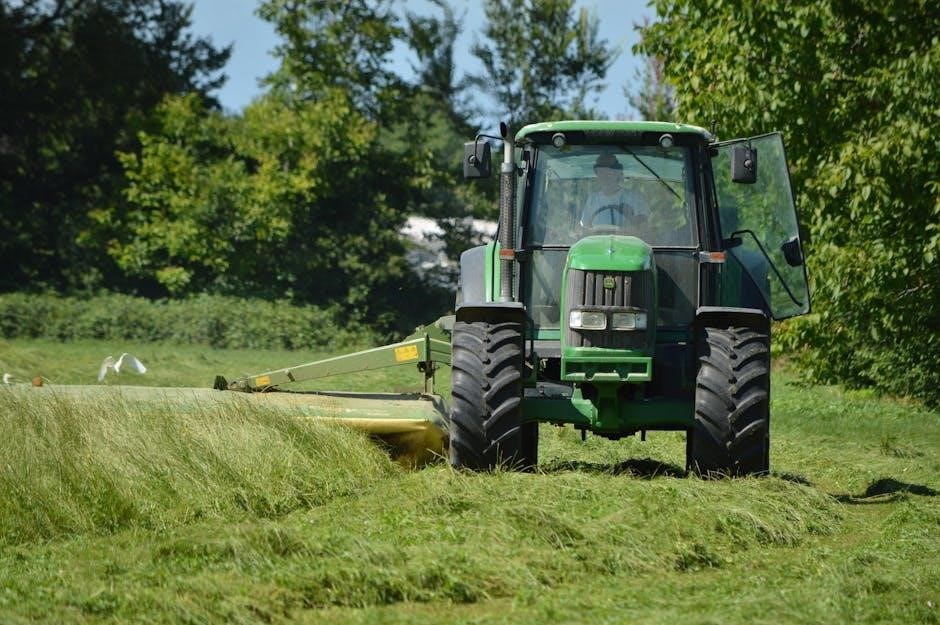
For optimal results, mow when the grass is dry. Adjust the cutting height to avoid removing more than one-third of the grass blade length at a time. Overlap each mowing pass by a few inches to prevent scalping and ensure a consistent cut. Vary mowing patterns with each cut to promote healthy turf growth.
When mowing near obstacles, reduce speed and carefully maneuver around them. Regularly inspect the lawn for debris and remove it before mowing. Sharp blades are crucial for a clean cut and healthy lawn; dull blades tear the grass, increasing disease risk.
Attachment Operation (e.g., Snow Blower, Cart)
Before attaching any implement, ensure the tractor is off and the parking brake is engaged. Consult the attachment’s specific owner’s manual for detailed installation and operating instructions. Properly connect the attachment to the tractor’s three-point hitch or drawbar, verifying secure locking mechanisms.
For snow blowers, adjust the discharge chute direction before operation. When using a cart, distribute the load evenly to maintain stability. Always operate attachments at a safe speed and be mindful of surrounding obstacles; Regularly inspect attachment connections for wear or damage.
Maintenance Schedule
Regular maintenance is crucial for optimal performance and longevity. Perform an oil and filter change every 25-50 hours of operation, or annually, whichever comes first. Inspect and clean or replace the air filter as needed, typically every 100 hours. Check the fuel filter annually, replacing it if contaminated.
Additionally, inspect belts for cracks or wear, and replace them when necessary. Sharpen or replace mower blades every 25 hours for a clean cut. Follow the recommended schedule for greasing lubrication points to prevent wear and tear on moving parts.
Regular Maintenance Tasks (Oil Changes, Filter Replacements)
Oil changes should occur every 25-50 hours, utilizing a quality 10W-30 oil. Always replace the oil filter concurrently with the oil change for optimal engine protection. The air filter requires inspection after every 25 hours, cleaning or replacement as needed – typically annually or after 100 hours.
Fuel filter replacement is recommended annually to prevent fuel system issues. Ensure proper disposal of used oil and filters, adhering to local environmental regulations. Maintaining these tasks extends engine life and ensures peak performance.
Blade Sharpening and Replacement
Regularly sharpen mower blades to ensure a clean cut and healthy lawn; dull blades tear grass, increasing disease susceptibility. Sharpening should occur every 25 hours or at the start of each mowing season. Inspect blades for damage – cracks, bends, or excessive wear – requiring replacement.
Always disconnect the spark plug before working on the blades. Balance blades after sharpening to prevent vibration and damage to the mower deck. Replace blades in pairs for even cutting performance and to maintain balance.
Belt Inspection and Replacement
Regularly inspect drive belts for cracks, fraying, glazing, or excessive wear. A worn belt can slip, reducing mowing performance and potentially causing damage to the transmission. Check belt tension; proper tension is crucial for efficient power transfer. Replace belts that show signs of wear or damage immediately.
Disconnect the spark plug before any belt work. Refer to the parts diagram to identify the correct belt for your L100 model. Ensure the new belt is routed correctly according to the manual, following the original path. Verify proper tension after installation.
Troubleshooting Common Issues
This section addresses frequent problems encountered with the John Deere L100. Engine issues like no-start conditions often relate to the spark plug, fuel filter, or carburetor; ensure these are clean and functioning correctly. Deck and blade problems, such as uneven cutting, may stem from dull blades or a bent deck – sharpen or replace as needed.
Drive system troubles, including loss of drive power, could indicate a worn or slipping belt, or issues with the transmission. Always consult the manual for specific diagnostic steps and safety precautions before attempting repairs.
Engine Problems and Solutions
Common engine issues with the John Deere L100 include difficulty starting, rough idling, and loss of power. A frequent cause is a dirty air filter – regular cleaning or replacement is crucial. Check the spark plug for fouling or damage; replace if necessary. Fuel problems, like a clogged fuel filter or stale gasoline, can also hinder performance.
If the engine won’t start, verify the fuel shut-off valve is open and the ignition switch is functioning. Consult the owner’s manual for detailed troubleshooting steps and safety guidelines before attempting any repairs.
Deck and Blade Issues
Uneven cutting or poor grass discharge often points to dull or damaged blades. Regularly sharpen the blades, ensuring they are balanced to prevent vibration. Inspect the mower deck for buildup of grass clippings, which can affect cutting quality and lead to corrosion. Check the deck level; an uneven deck results in an uneven cut.
Loose or damaged blades are a safety hazard and must be addressed immediately. Always disconnect the spark plug wire before working on the blades or deck. Refer to the owner’s manual for proper blade installation and torque specifications.
Drive System Troubleshooting
Loss of drive power can stem from several issues. First, check the drive belt for wear or breakage; a slipping or broken belt prevents power transfer. Inspect the belt tension – insufficient tension causes slippage. Examine the transmission for leaks or damage, as fluid loss impacts performance.
If the tractor moves erratically, investigate the linkage connecting the drive control to the transmission. Ensure proper adjustment and lubrication of these components. Consult the manual for specific troubleshooting steps related to the L100’s transmission system.

Parts Diagrams and Identification
Detailed parts diagrams are crucial for identifying components during repairs or replacements. These diagrams, often found in the service manual or online through John Deere’s resources, illustrate exploded views of assemblies like the engine, deck, and transmission. Each part is typically labeled with a reference number.
Utilizing these numbers when ordering replacement parts ensures compatibility. John Deere’s website provides interactive parts catalogs allowing searches by model number and diagram. Accurate identification prevents ordering incorrect parts, saving time and frustration during maintenance.
Finding Replacement Parts
Locating replacement parts for your John Deere L100 is streamlined through several avenues. Authorized John Deere dealers offer genuine parts and expert assistance, ensuring quality and fit. Online retailers specializing in lawn and garden equipment also stock a wide range of components.
When ordering, always have your tractor’s model and serial number handy to guarantee compatibility. John Deere’s website features a parts catalog where you can search by model or part number. Consider using the parts diagrams to visually confirm the correct component before purchasing.
Understanding Serial Numbers and Model Codes
Your John Deere L100’s serial number and model code are crucial for identifying your specific tractor. The model code, typically “L100,” designates the base model, while the serial number provides manufacturing details and year of production.
Locate these codes on a plate usually found on the tractor’s frame, often under the seat or near the front axle. This information is essential when ordering parts, accessing specific documentation, or contacting John Deere support. Accurate identification ensures you receive the correct components and information for your machine.
Accessing Official John Deere Resources
John Deere provides extensive online resources for L100 owners. The official website allows you to download operator’s manuals, parts catalogs, and technical manuals in PDF format, often free of charge. These resources are invaluable for maintenance, repairs, and understanding your tractor’s operation.
Additionally, John Deere offers online support and access to user forums where you can connect with other owners and experts. These platforms provide a space to ask questions, share knowledge, and find solutions to common issues. Utilizing these official channels ensures accurate and reliable information.
Downloading Operators Manuals and PDFs
Accessing your John Deere L100’s operator’s manual as a PDF is straightforward. The official John Deere website hosts a comprehensive library of manuals, searchable by model number. Simply enter “L100” into the search bar to locate the correct document. Downloading the PDF allows offline access for convenient reference during maintenance or operation.
These manuals contain vital information regarding safety precautions, operating instructions, maintenance schedules, and troubleshooting tips. Having a digital copy readily available eliminates the need to replace a lost or damaged physical manual, ensuring you always have essential guidance at your fingertips.
John Deere Online Support and Forums
Beyond official documentation, numerous online resources offer support for John Deere L100 owners. The John Deere website provides a support section with FAQs and contact information for assistance. Furthermore, dedicated online forums and communities are invaluable for connecting with fellow L100 users.
These forums serve as platforms to ask questions, share troubleshooting tips, and exchange knowledge about maintenance and repairs; Experienced owners often provide detailed guidance and solutions to common issues, supplementing the information found in the official manuals. Utilizing these resources can significantly enhance your ownership experience.
Safety Manual Specifics (L100-L130 Series)
The John Deere L100-L130 Safety Manual emphasizes crucial operational precautions. It details potential hazards associated with lawn tractor use, including blade injuries and rollover risks. Always ensure the mower deck is disengaged before any inspection or maintenance. Never allow passengers on the tractor, and always be aware of bystanders.
Proper protective gear, like eye and foot protection, is mandatory during operation and maintenance. The manual stresses the importance of reading and understanding all safety decals affixed to the machine. Regularly inspect the tractor for worn or damaged parts, addressing them promptly to maintain safe operation.